
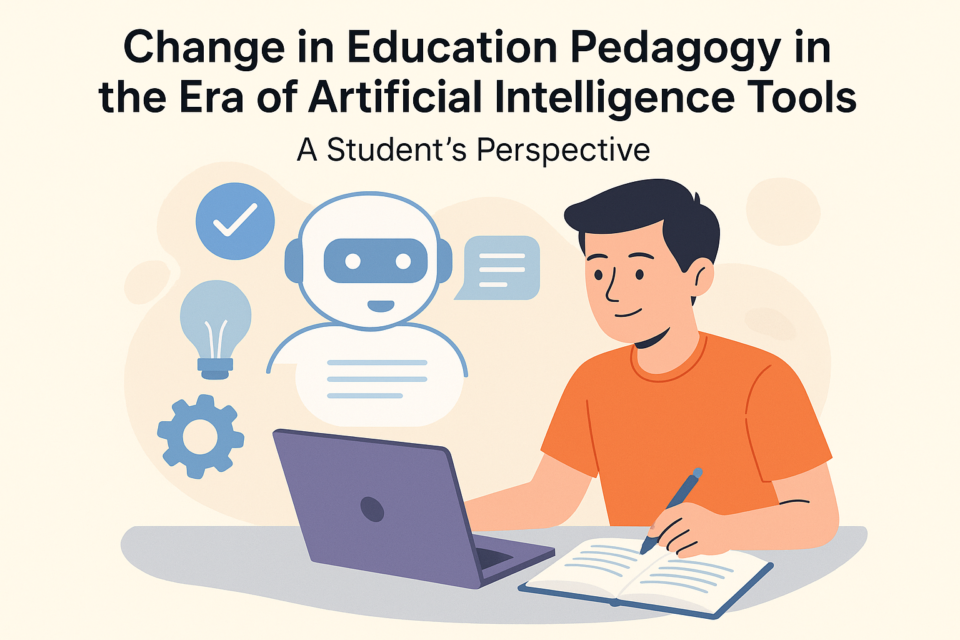
The world of education is going through a massive transformation. The arrival of Artificial Intelligence (AI) tools has changed how students learn, how teachers teach, and how knowledge is accessed. With smart technologies like ChatGPT, Gemini, Copilot, and various AI-based research and productivity tools, information is now literally available at our fingertips.
But in this new AI-driven world, being smart is not just about having access to tools—it’s about knowing how to use them intelligently.
1. When Tools Are Smart, Students Need to Be Smarter
AI tools can summarize, create, calculate, and even write. But the quality of output depends entirely on the quality of input.
Students who give detailed, thoughtful, and well-structured prompts get meaningful results. Those who just type one-line queries receive generic and shallow outputs.
That’s why the first rule of the AI era is simple:
👉 Garbage in, garbage out.
To use AI effectively, students must think deeply, plan their questions carefully, and provide context-rich inputs. The smarter your questions, the smarter your answers.
2. Refinement Through Iterations: The Art of Improving AI Output
AI is not magic; it’s a collaborative partner in learning. The first answer may not always be perfect. Students need to iterate, ask follow-up questions, and refine the content until it meets their standards.
This process builds patience, critical analysis, and precision—all essential skills in today’s professional world.
3. Verify Before You Believe: Source Checking Is a Must
AI tools gather data from across the internet, and not every source is reliable.
Students must cross-check facts, verify sources, and confirm authenticity before using any AI-generated content for assignments, research papers, or presentations.
Remember, in the AI age, information is abundant but accuracy is rare.
Your credibility as a learner depends on how well you filter truth from noise.
4. From Information to Implementation: The Real Challenge
AI can give you all the knowledge in the world—but implementation is still your job.
Knowing the answer and applying it in real life are two different things. The winners of the future will not be those who simply “know” but those who can do—who can apply knowledge, solve real problems, and think independently.
Students should focus on:
- Turning AI insights into actionable outcomes
- Practicing real-world applications
- Engaging in projects, internships, and simulations
That’s how learning becomes transformation.
5. Communication Is the Ultimate Skill
In today’s digital age, communication is more powerful than ever. Whether it’s human-to-human communication or human-to-machine communication (prompting), clarity matters.
Students who can express ideas clearly—no matter what language they use—will lead the future.
Communication today is not just about speaking; it’s about conveying, connecting, and collaborating.
The ones who can communicate well with people and machines will truly be the leaders of the AI era.
6. The Future Belongs to Critical Thinkers and Communicators
Education is no longer about memorizing books—it’s about understanding concepts, analyzing data, and questioning outcomes.
Students need to:
- Pay attention to small details
- Think critically
- Communicate effectively
- Provide personal opinions based on evidence
- Continuously learn and unlearn
The world is changing fast, and adaptability is the new intelligence.
Conclusion: Learn, Adapt, Communicate
Artificial Intelligence is not replacing students—it’s amplifying their potential.
But to truly benefit, one must be proactive, thoughtful, and articulate.
The real future of education lies in a balanced partnership between human intelligence and artificial intelligence.
And in that partnership, the student who learns how to think, communicate, and apply knowledge will always win.
Sachin Jain
Executive Director Corporate Relations and Marketing
