
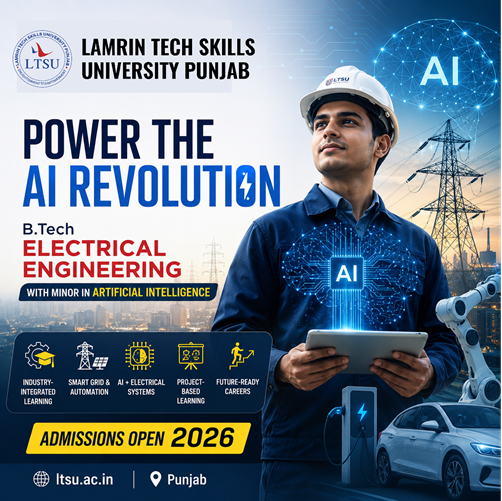
The AI Revolution Needs More Than Software Engineers
For years, students believed that Artificial Intelligence (AI) was only for Computer Science graduates. However, the latest industry trends tell a completely different story.
As AI adoption accelerates across the world, companies are investing billions of dollars in building AI infrastructure—data centres, smart factories, power systems, electric mobility, renewable energy networks, robotics, and industrial automation.
The surprising outcome?
Electrical Engineers are becoming some of the biggest beneficiaries of the AI revolution.
Recent industry reports highlight that the explosive growth of AI infrastructure has created unprecedented demand for electrical engineers, electricians, power system specialists, automation experts, and energy professionals. Modern AI cannot function without reliable electricity, intelligent power systems, industrial automation, sensors, control systems, and high-performance electrical infrastructure.
In simple words:
Artificial Intelligence runs on software, but it survives on Electrical Engineering.
The New AI Economy is Built on Power
Every AI application we use—from ChatGPT and autonomous vehicles to smart manufacturing and cloud computing—depends on massive physical infrastructure.
Behind every AI model are:
- High-capacity data centres
- Intelligent electrical grids
- Power distribution systems
- Smart sensors
- Industrial automation
- Robotics
- Renewable energy integration
- Battery energy storage
- Electric vehicle charging infrastructure
- Intelligent buildings
All these systems require skilled Electrical Engineers.
Industry reports indicate that AI-driven infrastructure expansion is creating significant demand for professionals in electrical engineering, power systems, automation, cooling technologies, and industrial infrastructure. At the same time, employers increasingly value engineers who understand both traditional engineering principles and Artificial Intelligence. This combination is becoming one of the most future-ready skill sets in engineering. Recent hiring reports also show that AI-enabled roles are growing faster than conventional technology hiring and professionals with AI skills command higher salaries.
Why Traditional Electrical Engineering Alone is No Longer Enough
Electrical Engineering remains one of the strongest engineering disciplines.
However, industries today expect engineers to understand intelligent systems as well.
Tomorrow’s electrical engineer should know how to work with:
- Artificial Intelligence
- Machine Learning
- Data Analytics
- Smart Grids
- Internet of Things (IoT)
- Robotics
- Industrial Automation
- Digital Twin Technology
- Predictive Maintenance
- Industry 4.0
This is where a Minor in Artificial Intelligence creates a major career advantage.
Instead of being limited to conventional electrical jobs, graduates become capable of designing intelligent electrical systems powered by AI.
Why Choose Electrical Engineering with a Minor in AI at Lamrin Tech Skills University?
Lamrin Tech Skills University (LTSU), Punjab, has designed its engineering education around the needs of modern industry.
Rather than teaching Electrical Engineering in isolation, LTSU focuses on developing engineers who understand both core electrical concepts and emerging AI technologies.
Students gain exposure to:
- Core Electrical Engineering
- Artificial Intelligence Fundamentals
- Smart Automation
- Embedded Systems
- IoT Applications
- Industry-Oriented Projects
- Digital Technologies
- Industrial Training
- Real-World Problem Solving
This multidisciplinary approach prepares graduates for careers where electrical engineering and AI increasingly work together.
Learn Beyond the Classroom
One of the biggest differences at LTSU is its emphasis on experiential learning.
Students don’t just study theories.
They work on:
- Industry projects
- Practical laboratories
- Innovation-based learning
- Problem-solving assignments
- Internship opportunities
- Professional skill development
This approach helps bridge the gap between university education and industry expectations.
Industries Hiring AI-Enabled Electrical Engineers
The career opportunities extend far beyond conventional power companies.
Graduates can work in:
AI Data Centres
The global expansion of AI data centres has dramatically increased demand for professionals who understand electrical infrastructure, power distribution, cooling systems, and automation.
Smart Manufacturing
Factories are becoming intelligent using AI-driven robotics, industrial automation, and predictive maintenance.
Electric Vehicles
The EV ecosystem requires engineers with expertise in batteries, charging infrastructure, control systems, and AI-enabled energy management.
Renewable Energy
Solar, wind, battery storage, and smart grid technologies increasingly depend on AI for optimisation and monitoring.
Robotics & Automation
Industrial robots combine electrical systems with AI-powered intelligence.
Smart Cities
Traffic systems, intelligent lighting, surveillance, utility management, and energy distribution all rely on electrical engineering integrated with AI.
Career Opportunities After Graduation
Students graduating with Electrical Engineering and AI exposure can pursue roles such as:
- Electrical Design Engineer
- Power System Engineer
- Automation Engineer
- Smart Grid Engineer
- Energy Management Engineer
- AI-enabled Industrial Engineer
- Robotics Engineer
- Control Systems Engineer
- EV Infrastructure Engineer
- Industrial IoT Engineer
- Renewable Energy Engineer
- Data Centre Infrastructure Engineer
As industries continue to digitise, professionals with this hybrid skill set are expected to enjoy broader career opportunities.
Why Employers Prefer Hybrid Engineers
Modern companies increasingly look for professionals who understand multiple technologies.
An engineer who understands both:
- Electrical Systems
and
- Artificial Intelligence
can solve larger business problems than someone with expertise in only one domain.
Hybrid engineers help organisations:
- Reduce energy consumption
- Automate operations
- Improve productivity
- Predict equipment failures
- Build intelligent infrastructure
- Optimise industrial performance
This makes them valuable across multiple industries.
Future-Proof Your Engineering Career
Technology will continue to evolve rapidly.
However, the need for:
- Electricity
- Power Systems
- Automation
- AI Infrastructure
- Renewable Energy
- Smart Manufacturing
will only continue to grow.
Choosing Electrical Engineering with a Minor in Artificial Intelligence allows students to prepare for both today’s opportunities and tomorrow’s innovations.
Rather than choosing between Electrical Engineering and AI, students gain the advantage of both.
Why Lamrin Tech Skills University?
Lamrin Tech Skills University focuses on industry-oriented education designed to prepare graduates for modern careers.
Key highlights include:
- Industry-integrated curriculum
- Minor in Artificial Intelligence
- Project-based learning
- Practical laboratory exposure
- Internship opportunities
- Industry collaboration
- Modern learning environment
- Career-focused education
- Future-ready engineering programs
Final Thoughts
Artificial Intelligence is not replacing Electrical Engineering—it is transforming it.
The future belongs to engineers who understand both the physical and digital worlds.
Electrical engineers will continue to power data centres, smart cities, renewable energy systems, electric vehicles, robotics, and intelligent industries. Adding Artificial Intelligence to this foundation creates professionals capable of leading the next wave of technological innovation.
For students aspiring to build a successful, future-ready engineering career, Electrical Engineering with a Minor in Artificial Intelligence at Lamrin Tech Skills University, Punjab offers an excellent opportunity to develop the skills demanded by the industries of tomorrow.
The AI revolution needs more than coders—it needs engineers who can build, power, automate, and intelligently manage the world around us.
