
A University Perspective for Students, Parents & Policymakers
The future of work is no longer a distant discussion — it is already unfolding. Artificial Intelligence (AI), automation, and digital platforms are rapidly transforming industries, redefining job roles, and reshaping the skills required to succeed.
At Lamrin Tech Skills University (LTSU), we believe that the key question for higher education is not “Will technology replace jobs?” but rather:
“What kind of human skills will ensure sustainable employability in 2030 and beyond?”
This article is written especially for students, parents, and policymakers, to clearly explain which skills will matter most — and how universities must respond.
Understanding the Shift: From Degree-Centric to Skill-Centric Careers
Traditionally, careers were built around:
- Fixed degrees
- Predictable job roles
- Linear growth paths
By 2030, careers will be:
- Skill-driven
- Multi-disciplinary
- Continuously evolving
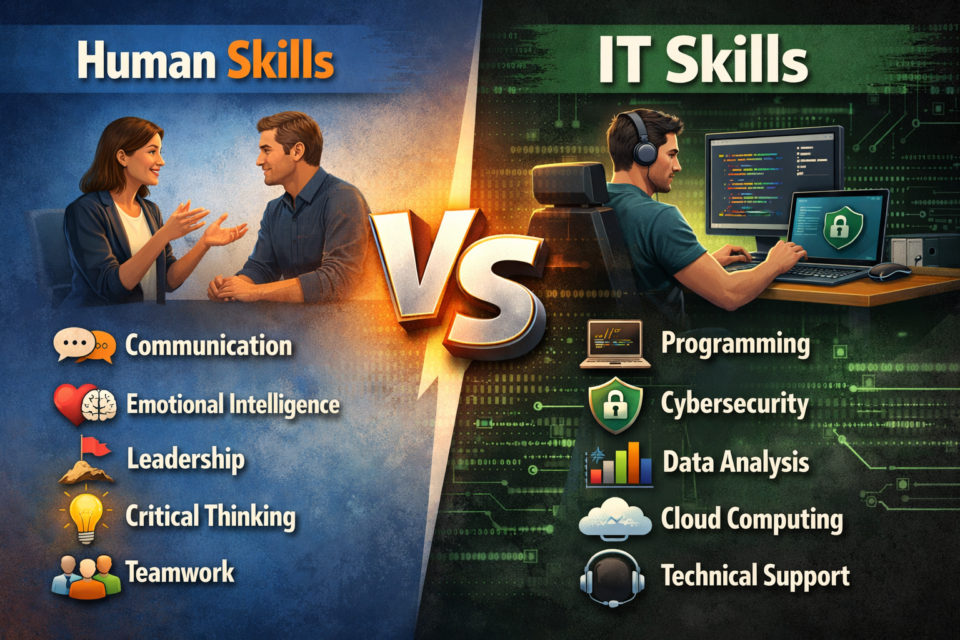
While IT and technical skills remain important, human skills will decide long-term success.
For Students: Skills That Will Secure Jobs in 2030
1. Critical Thinking & Problem-Solving
Future employers will value students who can:
- Analyze real-world problems
- Take decisions in uncertain situations
- Apply knowledge, not just memorize it
Why it matters:
AI can provide answers, but humans must define the problem.
2. Communication & Collaboration
Jobs will increasingly involve:
- Cross-functional teams
- Industry–academia collaboration
- Global work environments
Students who can express ideas clearly, listen actively, and work in teams will always stay relevant.
3. Emotional Intelligence (EQ)
Careers involving people will grow, not shrink.
Fields like:
- Education
- Healthcare
- Management
- Human resources
- Customer engagement
require empathy, understanding, and trust — qualities no machine can replace.
4. Creativity & Innovation
AI can generate content, but original thinking comes from humans.
Students who can:
- Think creatively
- Innovate solutions
- Design new ideas
will lead future industries.
5. Learning Agility (Ability to Relearn)
The most powerful skill of 2030 is the ability to learn, unlearn, and relearn.
Degrees will open doors, but adaptability will sustain careers.
For Parents: Rethinking “Safe Careers”
Many parents still equate safety with:
- Traditional degrees
- Government jobs
- Fixed professions
However, the reality is changing.
Careers at Risk by 2030:
- Repetitive data-entry roles
- Routine clerical jobs
- Low-skill IT support work
- Tool-based jobs without conceptual understanding
Careers with Strong Future:
- Skill-integrated degree programs
- Industry-linked education
- Apprenticeship-embedded learning
- Roles combining technology + human judgment
Parents should support institutions that focus on employability, not just certificates.
For Policymakers: Why Human Skills Must Be Central to Education Policy
To prepare India’s youth for the future, education policy must:
- Encourage skill-based and work-integrated programs
- Promote apprenticeships and industry collaboration
- Balance technology education with human development
- Embed ethics, leadership, and communication into curricula
Future-ready universities must act as talent creators, not just degree distributors.
IT Skills in 2030: What Will Stay & What Will Fade
IT Skills That Will Remain Important:
- AI & data literacy (with domain application)
- Cybersecurity
- Cloud and digital infrastructure
- Human-centered technology design
IT Skills That Will Lose Relevance:
- Basic coding without problem-solving ability
- Manual reporting and repetitive system work
- Tool-specific knowledge without fundamentals
👉 Technology skills must be supported by human skills to stay relevant.
LTSU’s Approach: Education for 2030, Not 2010
At Lamrin Tech Skills University, the academic philosophy is clear:
- Skill-first education
- Industry-integrated learning
- Apprenticeship and experiential models
- Focus on communication, leadership, ethics, and innovation
- Affordable, accessible, and outcome-driven education
LTSU prepares students not just for their first job, but for their entire career journey.
Conclusion: Humanity Will Be the Competitive Advantage
In 2030:
- Technology will be common
- Degrees will be widespread
- Automation will be everywhere
But human skills will be rare — and valuable.
The future belongs to those who combine technology with humanity.
Universities, parents, students, and policymakers must work together to ensure education builds capable, confident, and conscious professionals for the future.
